
What Is Narrative Therapy?
Narrative therapy is a counselling approach built around a gentle yet powerful idea: the stories we tell about ourselves shape how we feel, how we cope, and how we navigate the world. When people search for what narrative therapy is, they’re usually trying to understand why certain experiences feel heavier than others and why the meaning attached to those experiences stays with them.
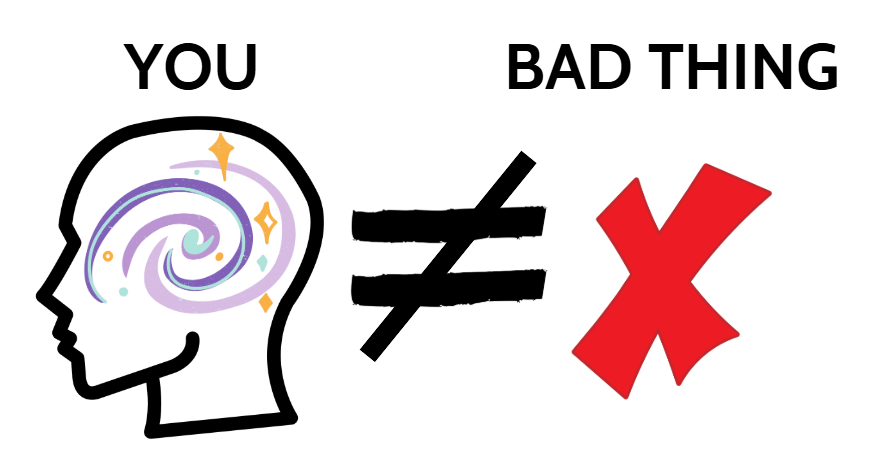
At its heart, narrative therapy helps separate you from the problem, so you don’t end up believing you are the problem. Instead, you’re given space to see your experiences with more clarity, compassion, and choice. Developed by Michael White and David Epston, narrative therapy is particularly supportive for individuals who’ve been told painful or inaccurate stories about themselves, often by family, sometimes by culture, and sometimes by society itself.
As a Melbourne-based counsellor working with neurodivergent, queer, and trauma-impacted clients, I’ve seen how freeing it can be when someone realises the story they’ve been carrying isn’t the only version available. Narrative therapy gives people room to rewrite their story in ways that feel more accurate, grounded, and self-supportive.
How Narrative Therapy Works
Externalisation
Instead of thinking “I am anxious,” the problem becomes “Anxiety shows up and bothers me.” This shift creates breathing room and reduces shame.
Re-authoring Conversations
You explore where certain beliefs or interpretations came from — and then reshape them in ways that feel more aligned with your values.
Recognising Outside Influences
Messages from family, school, society, or culture all influence how you see yourself. Narrative therapy helps you decide which ones you want to keep and which ones you’re ready to release.
Highlighting Strengths and Values
People are more than their struggles. Narrative therapy makes space to notice your skills, boundaries, choices, and resistance — the parts of you that are often overshadowed by “the problem.”
Why Narrative Therapy Matters for Real People
Many clients arrive with stories they never asked for — stories someone else wrote for them. “Too sensitive.” “Not trying hard enough.” “Difficult.” “Lazy.” “Too much.” “Not enough.” Narrative therapy helps people raise an eyebrow at those stories and ask, “Who told me that — and do I even agree?”
This approach is especially helpful for anyone who has felt misunderstood or judged: queer folks, neurodivergent adults, people from marginalised communities, or anyone who has been made to feel like the “problem.”
The Story Behind Narrative Therapy and Why Meaning Matters
There’s this great quote by Michael White, the “father” of narrative therapy, that unfortunately sounds pretentious as heck. “Meaning does not pre-exist the interpretation of experience.” This guy’s books are just chapters of sentences like this; they are DENSE. But his point is sound:
“Experiences don’t have meaning until someone creates meaning for themself.”
What does that mean? The stuff that happens to us just happens; it’s what that stuff means to us that shapes how we understand it.
If you’re thinking that doesn’t make sense, consider this: The first time I shaved my head, I was 18, bored, and my housemate had an electric razor. It wasn’t a big deal, to me or anyone else. Go back a few hundred years, and women were forced to have their heads shaved as punishment, and it was considered hugely traumatising and impactful. And even now, you can find articles about young women shaving their heads for charity, and they’re always so brave and amazing for cutting their long hair. So why wasn’t I sobbing on my bathroom floor, clutching my erstwhile curls?
Well, according to Michael White, it’s not the event, but the person, that defines the emotional impact of the event.
How Outside Voices Influence Our Stories
I’m very on board with this. Any member of a minority group has some experience with outside voices telling us what our experiences mean. And Narrative Therapy can help us take some of that power back by reducing how much outside voices get to control our narrative. Yes, outside forces still have an impact, but we at least can decide whether we take outside meanings to heart. Especially when who we are – physically, mentally, emotionally – is considered to be ‘weird’ or ‘wrong’ or ‘less than human’ by those outside forces.

Reclaiming Personal Power Through Narrative Work
It’s a way to take back power in our lives, starting with the power to define ourselves and our experiences on our terms.
So that’s one of the Big, Main Concepts of Narrative Therapy. It’s probably the first that comes to mind when people hear about it. “Oh, Narrative Therapy? That’s about, like, rewriting the story of your life, yeah?” The other well-known one is Externalisation. White’s most famous quote is actually:
“The person is not the problem, the problem is the problem.”
A Short Detour Into Therapy History
He was a big believer that modern medicine and psychiatry (modern by his standards – the 70s) were too focused on digging inside a person, finding the Bad Thing, and yanking it out. And if that sounds too oversimplified, keep in mind that Walter F. Freeman, inventor of the ice pick lobotomy and operator of the (I swear this isn’t a joke) Lobotomobile, was banned from practising surgery in 1967. It was the era of free love and freer ethics.
Anyway, our guy White believed that people don’t have a pure state of ‘goodness’ that gets damaged or poisoned, and requires an expert to get rid of the impurities and return people to their perfect state. He believed that we’re survivors, constantly growing and changing and making decisions not based on whether we’re ‘good’ or not, but on our complex relationship to reality and the information we have (or remember). The “bad thing” wasn’t inside us; it was something external that impacted us and that we could make choices and work against – or with, depending on what we wanted.
What Narrative Therapists Pay Attention To
So when looking at things like a Therapist, we ask about what people think and feel about a problem, how it affects them, and how they’ve resisted its effects. The problem can be anything, but the important thing is also that it’s you, and not the therapist, who decides what it is. Problems are unique and individual and take all sorts of forms, so we can’t guess what it is or how it affects you, just like we can’t guess how you’ve been standing up to it without asking you. There’s no driving into the town square and deciding all the teenagers would be model citizens if I remove a part of their brain without wearing gloves or a surgical mask… sorry, can’t stop thinking about the Lobotomobile.
Two Core Practices You’ll See in Narrative Therapy
We’re at two out of… at least ten… a whole bunch of fun things that Narrative Therapy does, and these two are among the mainstays. Can’t do Therapy without ‘em.
But you can do ‘em without going deeper into Narrative Therapy. Play with these ideas for yourself, and see if seeking out alternative stories or looking at a problem as outside yourself makes you feel differently about yourself.
A Gentle Invitation to Explore This Approach
If they sound interesting to you, go forth and learn more; you won’t regret it. If they sound like a way of working you’d like to experience, get in touch and let’s see what we can learn together. I promise not to get distracted by horrifying medical history.
When Narrative Therapy Can Help
Narrative therapy can be especially supportive when:
- You feel weighed down by shame or self-blame.
- You’ve absorbed messages from others that don’t feel true or fair.
- You’re exploring neurodivergence, masking, burnout, or identity questions.
- You want a collaborative therapy style rather than a prescriptive one.
- Trauma or past experiences still shape how you view yourself.
What a Narrative Therapy Session Looks Like
A session often feels like a thoughtful, open conversation. There’s no pressure to perform or get it “right.” Instead, we explore:
- When the problem shows up
- When it has less influence
- What outside forces shaped it
- Your skills, values, and boundaries
- Alternative stories that feel more supportive
This approach is gentle, curious, and deeply respectful of your autonomy.
Narrative Therapy at Unmask Therapy
I’m Felix, a counsellor in Melbourne with eight years of experience supporting neurodivergent adults, queer clients, and people navigating identity, trauma, and life transitions. My work is collaborative, affirming, and grounded in the belief that people are the experts of their own lives.
Narrative therapy aligns beautifully with this approach. It creates a space where your voice matters, your story is taken seriously, and your meaning-making is central.
FAQs
How is narrative therapy different from other therapies?
Instead of focusing on “fixing,” it focuses on understanding, reframing, and reclaiming the meaning of your experiences.
Can narrative therapy help with trauma or anxiety?
Yes. Many people find relief when the problem is externalised, and they are no longer defined by it.
Is narrative therapy helpful for neurodivergent adults?
Absolutely. It respects lived experience, autonomy, and the complexity of identity — without forcing people into boxes.
Final Thoughts
Narrative therapy reminds us that we are more than the stories we inherited. We get to choose which stories we carry, which ones we rewrite, and which ones we leave behind. If you’re curious about exploring your own story in a collaborative, gentle way, you’re welcome to reach out anytime.