

There’s a chapter in the book *Retelling the Stories of Our Lives* (David Denborough, 2013) called *Questioning Normality and Escaping Failure*. It’s exactly what it sounds like: a way of questioning the expectations and procedures in our lives so we can be freer from the self-hatred that often appears when we don’t meet other people’s standards.
Escaping “normal” isn’t about rebelling just for the sake of it. It’s about noticing how often “normal” is treated like a rulebook rather than a loose guideline — and how much quiet damage that can cause to people whose brains, bodies, or lives don’t fit the template. In therapy, especially narrative therapy, questioning the normal becomes a way to loosen shame and create more honest stories about who we are.
How Are We Judged?
There’s that well-known quote: “If you judge a fish by its ability to climb a tree, it will live its whole life believing that it is stupid.” It sounds obvious, almost cliché — and yet it appears everywhere. We assume that because someone else is climbing the tree easily, that must be the standard. If we struggle, the problem must be us. So we replace “tree” with “writing essays,” “reading books on paper instead of audiobooks,” or “doing small talk.” Some people excel at each of these — but why do we keep judging everyone by the same measures?
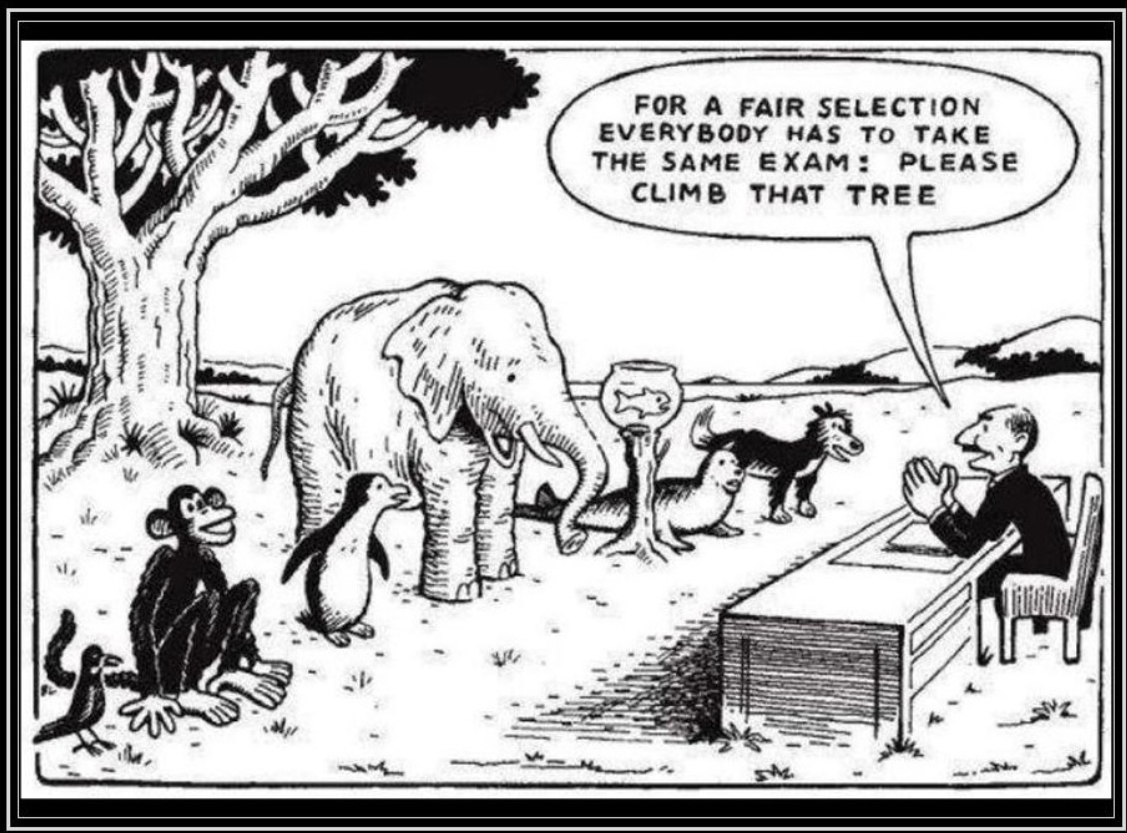
This is one reason I believe being visible and openly neurodivergent is important to how I work. Similarly, I think finding lived experience folks is really important, at least until everyone has a better basic understanding of our experiences. Because if someone isn’t taught about how our brains work – for better and for worse – then they can set expectations that we’re bound to fail. And while there’s no “fail state” in therapy, it can certainly feel like there is, and if the therapist doesn’t understand why we’re “failing,” it can just deepen the feelings of shame and self-loathing.
Why “Normal” Fails So Many People
“Normal” is built for systems, not humans
Most ideas of normal come from systems that value speed, consistency, and predictability. Schools, workplaces, and even some therapy models rely on these traits because they’re easier to manage.
Humans, on the other hand, are messy. We have fluctuating energy, uneven skills, and lives that don’t move in straight lines. When systems come first, people end up trying to mould themselves into shapes that don’t fit.
When difference gets mistaken for failure
Over time, this mismatch creates shame. People stop asking, “Does this system work for me?” and start asking, “What’s wrong with me?”
That’s where burnout, self-loathing, and a sense of constant inadequacy often begin — not because someone is broken, but because they’re trying to survive inside expectations that don’t match how they’re wired.
Wired Differently
Fact: Many people struggle with routines because their brains don’t produce the same “reward” signals that neurotypical brains do. Completing a task doesn’t come with that built-in sense of “yes, good job.”
So when motivation drops or routines fall apart, it’s not laziness or a lack of care. It’s a neurological difference.
This is where therapy fit matters. For example, some people are told they “can’t do CBT” because they struggle to maintain habits or complete homework. What often happens instead is a loop of shame: showing up week after week, saying, “I didn’t do it,” or quietly avoiding the truth to escape feeling judged.
Escaping “normal” in therapy means recognising when a method isn’t working — and not turning that into a character flaw.
Why Lived Experience Matters in Therapy
This is one reason I’m openly neurodivergent in my work. Lived experience changes how therapy feels in the room.
When someone doesn’t need to explain why routines collapse or why certain expectations feel impossible, there’s less pressure to perform. Therapy becomes a place where differences don’t need justification.
Visibility as part of the work
Being visible isn’t about self-disclosure for its own sake. It’s about signalling safety. It tells people: you’re not failing at therapy; the therapy needs to fit you.
That shift alone can reduce shame and make space for more honest conversations.
Who Benefits from Us Trying to Be “Normal”?
We certainly don’t. Trying to fit into others’ systems is a great way to burn out, hate yourself, chop yourself into bits until you fit, or all of the above. The people who love us don’t benefit, because if they love us, us and not the roles we play, then they just watch us suffering as we try to dance to the wrong tune.
There is a group that benefits, and it’s the people who fit expectations, because they get to have it easy, and get to watch everyone else struggling and pretend that they’re special, or gifted, or extra hard-working to succeed the way they do. They get to have their worldview validated because everyone else is trying to copy them, so they must be doing it right, yeah? We can all imagine someone like that – someone we know, or someone famous. And frankly, those people don’t deserve to be so comfortable. Not at our expense. If my happiness makes someone uncomfortable – well, maybe they need a little shaking up.
Does this sound like an interesting way to explore your experience? Does being normal (or failing to be normal) make your skin crawl? Let me know if you’d like to learn more about it or try out some of these ideas in your own life.
What Escaping “Normal” Can Look Like in Practice
Escaping “normal” doesn’t mean chaos or giving up. It often looks quieter than people expect.
Redefining success
Success might mean having energy left at the end of the day. Or choosing work that fits your rhythms, even if it looks unconventional. Or letting “good enough” be enough.
Dropping the need to explain
It can also mean choosing when and if you explain yourself. Not every boundary needs a justification. Not every difference needs translating.
These changes aren’t dramatic, but they’re steady. They reduce the daily friction of pretending to be someone else.
A Narrative Therapy View of Normal
Narrative therapy encourages people to separate themselves from the problem. “Normal” can be treated the same way.
Instead of “I’m failing at normal,” the question becomes, “How is the idea of normal affecting my life?” Once normal is externalised, people can decide how much power it gets.
From there, new stories can emerge — ones that centre values, strengths, and lived realities rather than compliance.
A Final Thought
Does this sound like an interesting way to think about your experience? Does being “normal,” or feeling like you’re failing at it, make your skin crawl?
You’re not alone in that reaction. For many people, escaping “normal” isn’t about becoming someone new. It’s about finally stopping the fight to be someone they were never meant to be — and finding room to breathe instead.
If this reflection sticks with you, that’s usually a sign there’s a different story worth telling.