
Part 1 was about why we should be kind to ourselves; now, here are some ways to actually do it.
If you missed “Be Nice to Yourself Part 1: Why Should I?“
Being Nice to yourself can sound simple, even trite — until you’re living with stress, burnout, or relentless self-criticism. This article explores self-kindness in mental health as something practical, grounded, and learnable. Not motivational fluff. Real actions, real shifts, and small choices that help your nervous system calm down, and your inner critic loosen its grip.
How Does Saying (and doing) Nice Stuff To Myself Actually Help?
To Summarise: self-hatred actively makes things worse. We want to avoid that. Self-kindness does the opposite. It’s not just about being nice because that’s the nice thing to do. It’s feeding yourself something that provides energy instead of draining it.
(Is “self-hatred” junk food in this analogy? No. Because pizza is pure happiness, and I refuse to associate it with the things that make me sad. It’s more like eating fresh fruit vs rotten fruit. Maybe? [Give me some better analogies in the comments!])
In Your Head
Pumping yourself up (rizzing? Is that… Is that what people say now?) serves a very practical purpose of generating the positive feelings and happy chemicals that make tasks feel doable. “I can do this” isn’t just a nice thing to say; it actively feels good to believe you can do something, and makes getting started much easier. (It also helps if you believe what you’re saying, but baby steps.)
And positive thoughts can counteract the negative ones. “I’m useless- wow, that’s not a helpful thing to think.” It is a way to be kind to yourself by shutting down thoughts you know will hurt you.
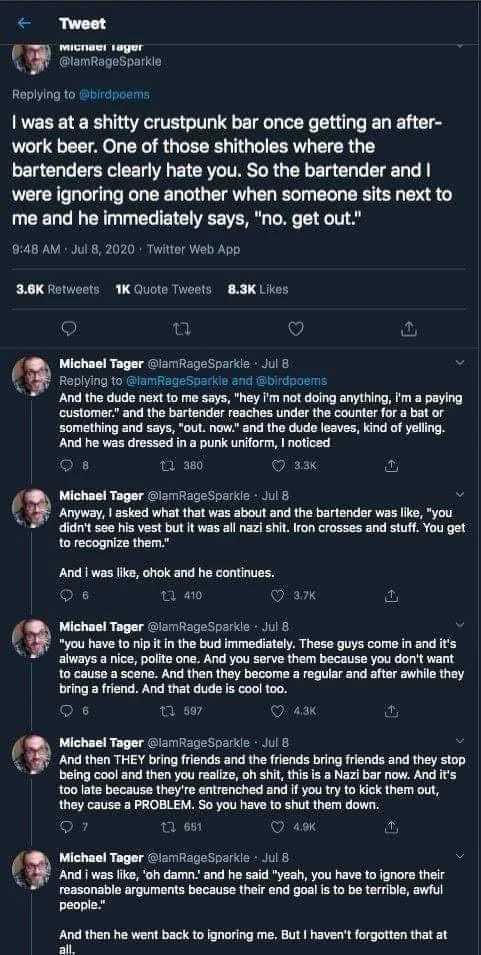
Because remember: negative thoughts have a whole bunch of friends, and once you let one in, they all trickle in. You have to actively respond to them, and nice thoughts are a way to do that. (Like a bartender kicking out a nazi vvv)
In Your Life
I’ve been focusing on positive thoughts, but touching on “self-care”, positive actions are also important. Doing something nice and actively treating it as a priority is good for your brain and good for your energy. How is taking a walk or a snack break when you’re stressed over a task useful?
It’s a physical way to break any budding negative thought cycles
A change of pace can generate new ideas
Doing a thing can help relax or rejuvenate you, which recharges your energy
Prioritising your wellness trains your brain to view you as worth caring for, and it’s harder to be a jerk to something you care for
Life Hack: being nice to others
Being nice to ourselves is hard, so if you’re not up for that yet, try doing something nice for others. And I’m not talking about that “I’ll care for others over myself because I don’t matter” self-hatred. I mean intentionally doing something that you don’t have to, for people who will appreciate it. If you’re doing something nice for people and they aren’t appreciating it or acknowledging your work, they’re part of the problem.
Ways to get started on self-kindness
Being nice to yourself is a process. We start where it’s easier, whether it’s doing something nice for yourself (but thinking mean thoughts the whole time), or using mindfulness to shut down self-hatred, and letting the actions flow from there.
Thoughts
Using mindfulness to notice negative thoughts and stop them:
telling yourself it’s not useful to think that
thinking up examples against the thought
Questioning the truth of a thought
Saying positive things to yourself, even if you don’t believe them yet – you can do it, you’ve survived all your worst days – yes, I know, who knew positive affirmations serve an actual purpose
If you’re not a word-thinker, conjuring up peaceful or positive images or sensations
Acknowledging what you’re doing and the purpose it serves – good or bad
Swap self-depreciation for self-aggrandisement. If you’re able to joke about being the worst, try joking about being the best instead
Try not to worry about whether being nice to yourself will turn you into a narcissist. Being nice to yourself doesn’t stunt your ability to be nice to others. There is enough niceness to go around.

Actions
Rest: Take “rest” seriously and take time to do nothing (or things that serve no purpose save your enjoyment) and treat it like the essential self-maintenance it is
Treat Yourself: do things you enjoy without it being a reward for completing tasks. Decouple feeling good from being productive.
Celebrate: What are you celebrating? Everything. Small actions, big ones, happy news, surviving a hard situation… celebrate everything important. Our brains hold on to negative memories already, so we have to be intentional about making good things big enough that our brains hold on to them.
Kindness isn’t easy, but it’s worth it
You’d think that being nice to yourself is the default, but it isn’t. It’s hard work for many of us, especially if we’ve lived with people or in societies that train us to be critical. And when you start this journey, you’ll have setbacks – you’ll have bad thought spirals that are too sneaky or too intense to talk your way out of. You’ll criticise yourself and believe it. You’ll refuse to sleep or snack, or exercise until the task is done. It’s all okay – being kind to yourself is about not hating yourself for failing, too. Just try to remember when you break out of the cycle, or do a small act of self-care, and hold on to that memory as valuable.
Oh, and don’t forget – you deserve people in your life who are nice to you, too.
Related Resource: